From War to Sovereignty: The Normalization of Tiered Internet in Iran
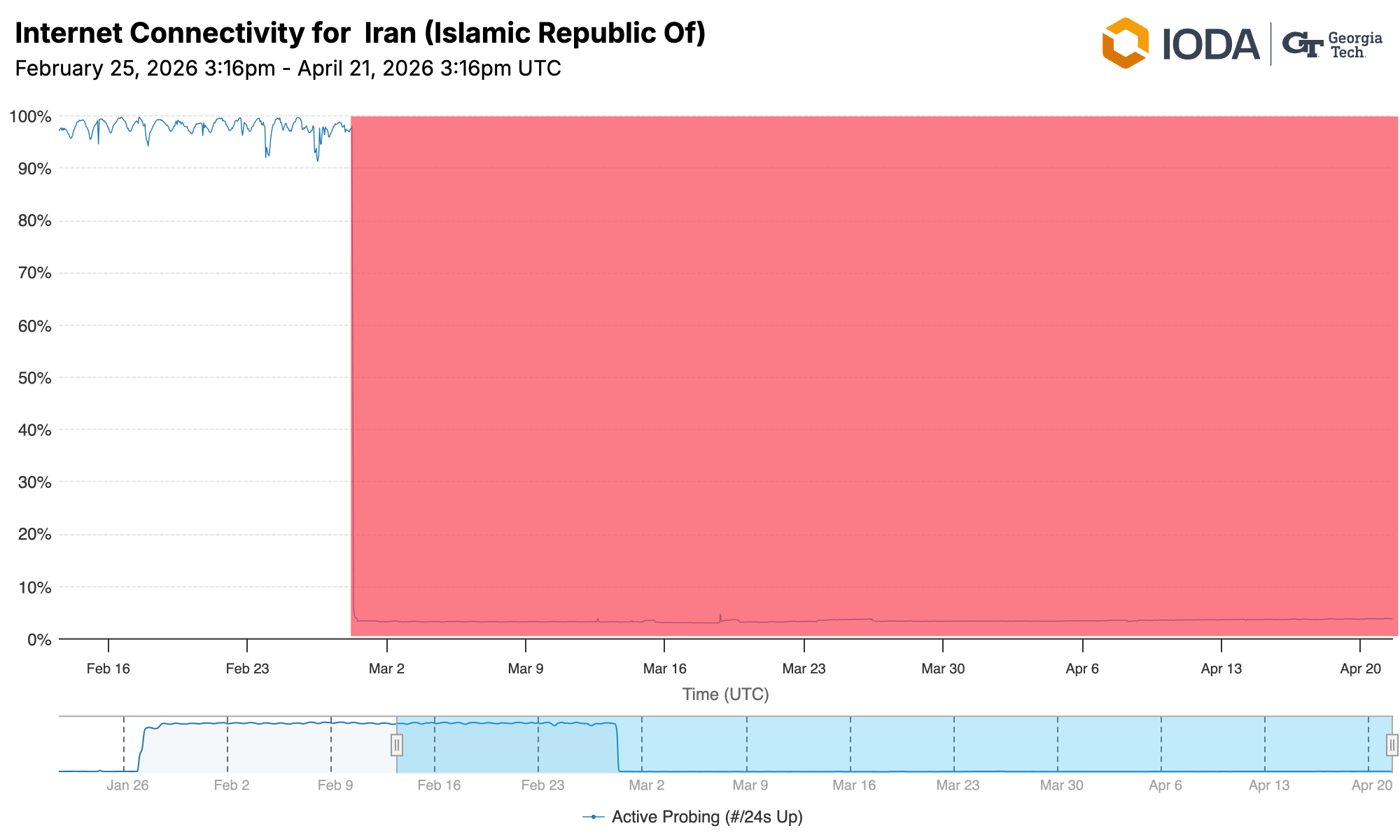
Iran is in it's 59th day of an ongoing shutdown to the global Internet. On February 28th, 2026, the United States and Israel launched airstrikes against Iran, and the Iranian regime once again reached for the Internet "kill switch." Similar to the January 2026 shutdown amid protests, Internet measurement data reveals a continued evolution in how the Islamic Republic (IR) controls the information environment.
The New Normal in Comparative Perspective
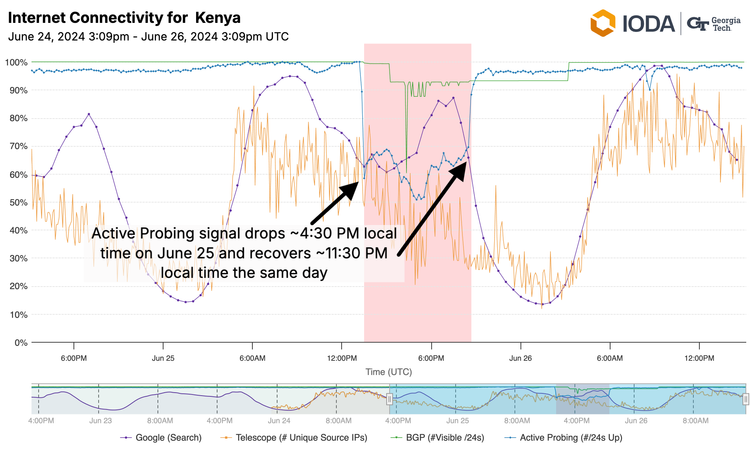
To understand the current state of Iran's network, we must look back at the previous two shutdowns. Triggered by nationwide protests, the January event was characterized by a near-total drop of Iranian connectivity to the global Internet. As documented in our previous comparative report, IODA measurements showed Active Probing responsiveness dropping to a mere 3%. During those ten days, even the National Information Network (NIN), which serves as the Iranian domestic, fire-walled Internet was disrupted in a rushed, "blunt force" reaction. In total, the global Internet shutdown lasted nearly 20 days. In contrast, the February 28th shutdown shows a regime that is moving towards a new normal in terms of digital borders and information control. February represents a shift toward what Doug Madory from Kentik calls "Digital Apartheid." The roots of this tactical shift were first visible in the June 2025 Israel-Iran War. During that 4-day conflict, IODA observed that BGP routing announcements remained largely intact, but IODA's Active Probing and Telescope signals showed a near-total Internet blackout. After less than 24-hours, Iran began restoring whitelisted Internet access. The February 28th event mimics this stealth blackout and represents a long-term expansion of this wartime protocol.
The Architecture of Tiered Access: "Internet Pro"
According to an investigative report by Filterwatch, the Iranian Regime is institutionalizing this "Internet Sovereignty" model through Tiered Access. Access is no longer a right, but a "government-granted privilege" calibrated by loyalty and economic status. On April 14th, the Iranian government officially unveiled the implementation of "Internet Pro." This system allows selective, unfiltered access for a "chosen minority" (state actors and authorized businesses) while the general public remains restricted to the NIN.
IODA Data: The Discrepancy in the Signals
There are three distinct practices visible in the IODA data:
- Access to the global Internet is still largely shutdown, as visible in IODA's Active Probing signal
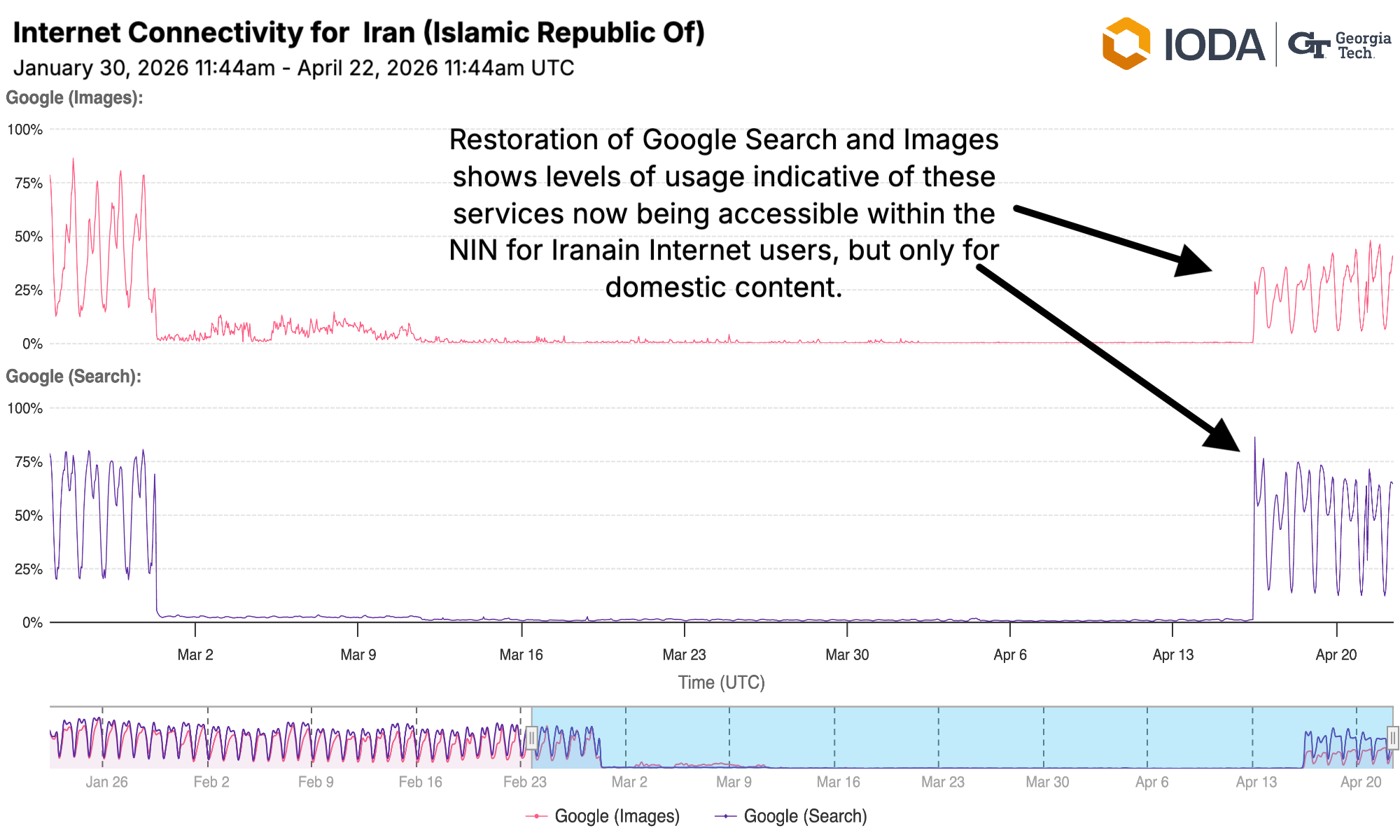
- The Iranian Regime has restored domestic, NIN access to specific online content like Google Search and Google Images. This means these services are available to the general Iranian-based Internet user, but still restricted to domestically available content on the NIN.
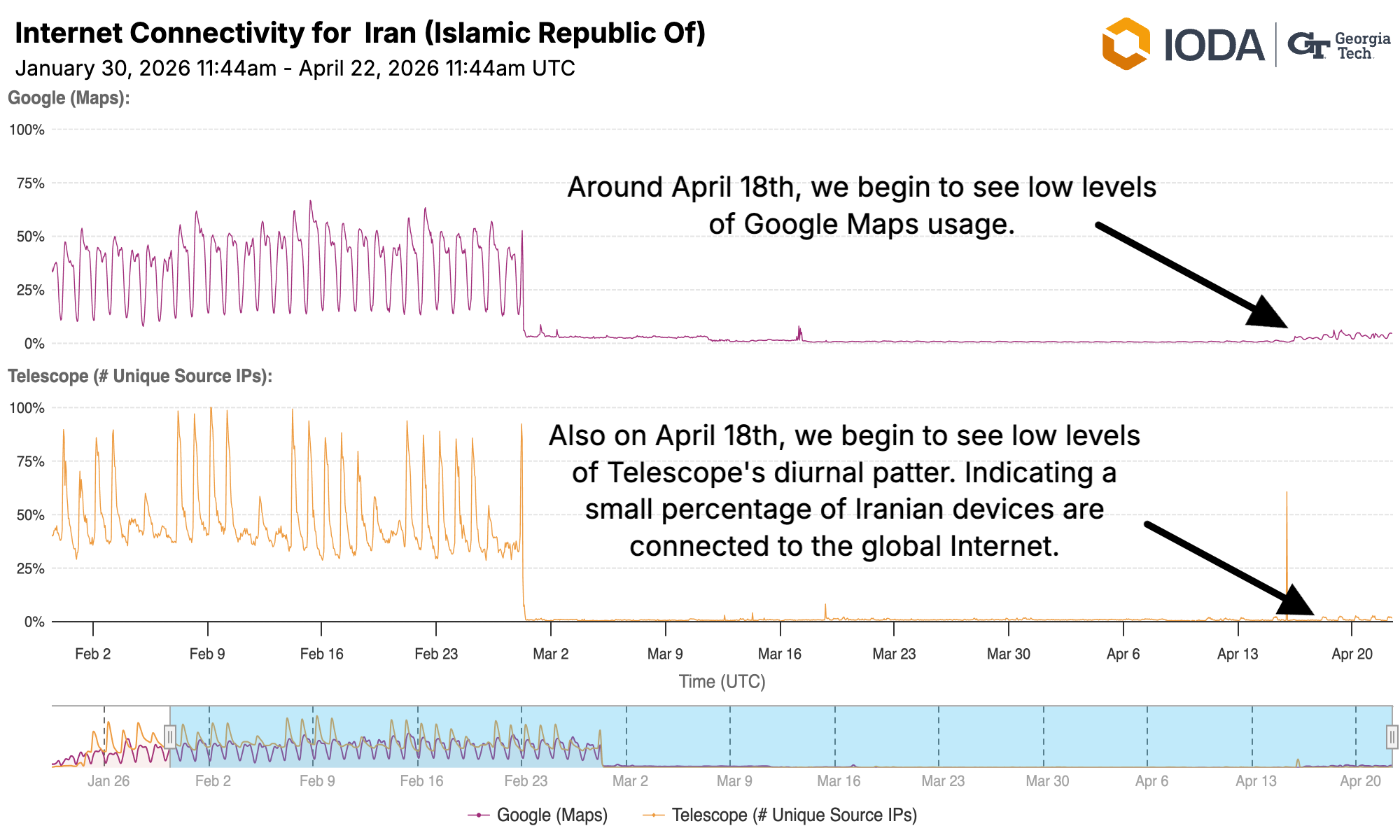
- There is evidence of the "Internet Pro" in the Google Product data that we know to still be whitelisted but show slight signs of recovery, namely: Google Maps. Additionally, IODA's telescope signal shows a slight increase in Internet pollution emanating from Iran, with it's usual diurnal pattern. Looking at the network level, we see a small increase in Telescope traffic on IranCell (AS44244) which is a mobile operator in Iran participating in the Internet Pro access. What is visible in IODA has been verified through traffic data from David Belson at Cloudflare Radar and Doug Madory at Kentik.
The Economic Toll
The regime claims this tiered system protects the economy. However, as detailed by FactNameh, the cost is staggering. They estimate the cost of the current internet shutdown to the Iranian economy to be around 40 million USD per day. They further explain that even with "Pro" access for a few, the digital retail sector has collapsed, and the 10 million Iranians who depend on the digital economy are left in the dark.
Conclusion
The shutdown starting with the US and Israeli attacks on Iran on February 28th appears to have triggered the rollout of a permanent new Internet reality in Iran. By moving from "Internet for all" to a discriminatory tiered system, the Iranian regime is attempting to build a wall that is transparent to the state but opaque to Iranian Internet users. IODA will continue to monitor these signals to ensure that even when the regime attempts to hide its actions behind "sovereignty," the reality of this digital isolation remains visible.